Zaynab El Bernoussi

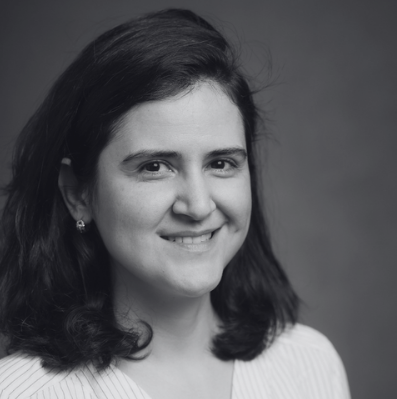
Zaynab El Bernoussi is an Associate Professor of Political Science at The Africa Institute, specializing in the politics of dignity, international relations, and international political economy. She holds a master’s degree in Finance from the Instituto de Empresa, an MPA from Columbia University, and a Ph.D. from the Catholic University of Louvain. In 2026, she was recognized by The Africa Report as one of the “10 African Scholars to Watch” and received the Global South Award from the International Political Science Association. She has held positions at institutions such as New York University Abu Dhabi, Al Akhawayn University, and Sciences Po Rabat, in addition to conducting research at Harvard University and Smith College. She currently holds leadership positions in international academic associations and serves on the editorial boards of leading journals in the field. She is the author of the book Dignity in the Egyptian Revolution (2021). She is currently a Fellow at the BRICS Policy Center/PUC-Rio, working alongside the research program Global South Unit for Mediation (GSUM).


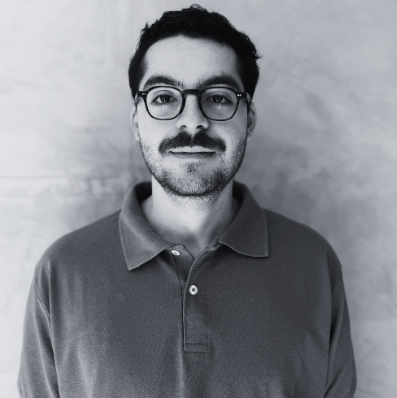
Ana Paula von Bochkor Podcameni

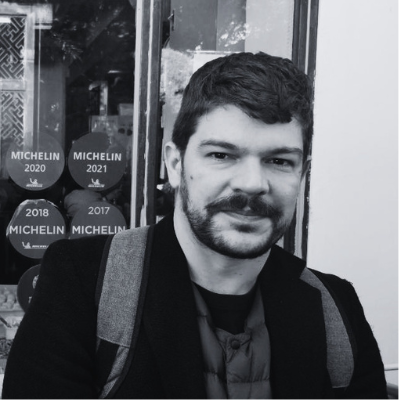
Ana Paula von Bochkor Podcameni holds a Ph.D. in International Relations from Florida International University (FIU/CAPES/Fulbright). She was a professor and researcher in International Law at FIU, specializing in international security, public international law, humanitarian law, and international regimes. She holds a master’s degree in International Relations from PUC-Rio (IRI). She was a visiting scholar at the Watson Institute (Brown University). In Brazil, she worked in the fields of science, technology, and innovation, as well as international trade. She served as associate director of the Technology and International Trade Programs at CEBRI. In Brasília, she worked at EMBRAPII, promoting international cooperation in R&D&I, and at the Office of the President, where she coordinated international cooperation initiatives related to social dialogue and participatory democracy.


Manuel Gonzalo

He holds a bachelor’s degree in economics with magna cum laude honors from the University of Buenos Aires (UBA), a master’s degree in economics and industrial development from the National University of General Sarmiento (UNGS), and a Ph.D. in economics from the Federal University of Rio de Janeiro (UFRJ). He is a professor and researcher at the National University of Quilmes (UNQUI) and at UNDEC (National University of Chilecito). He serves as coordinator of the working group on India and is a member of the BRICS+ working group at the Argentine Council for International Relations (CARI). He was a visiting researcher at the Center for Development Studies (CDS) at Jawaharlal Nehru University (JNU) in India and is an adjunct researcher at Redesist (Research Network on Local Productive and Innovative Arrangements and Systems) at the Institute of Economics (IE) of UFRJ. He has over 20 years of experience in research, teaching, and providing technical advisory services to governments, international organizations, and think tanks. He is the author of the book “India from Latin America: Peripherization, Statebuilding, and Demand-led Growth”, published by Routledge (2022).


Larissa Firmino

Undergraduate student in International Relations at the Pontifical Catholic University of Rio de Janeiro, research scolarship recipient in the Institutional Program for Scientific Initiation Scholarships (PIBIC), affiliated with the Critical Approaches to Development Network (ACD-Rede), co-founder and president of the Academic League for Ethnic and Racial Research at PUC-Rio.


Enzo Cosenza

Undergraduate student in International Relations at the Pontifical Catholic University of Rio de Janeiro, recipient of a scientific initiation scholarship in the Tutorial Education Program PET/TEPP at IRI PUC-RIO, and a research intern at the Critical Approaches to Development Network (ACD-Rede).


Pablo Ibañez

Pablo Ibañez is an associate professor at UFRRJ and the program coordinator for the “State, Institutions, and Public Policy” research area at the Center for Advanced Studies (CEA). He holds a Ph.D. in Geography, specializing in Geopolitics, from USP and a postdoctoral degree from UFRRJ. He was a visiting researcher at Fudan University in Shanghai, analyzing the developments of the New Silk Road. He currently researches the emergence of middle and great powers in the areas of technological innovation, defense, and geopolitics.


Fernanda Mendes Lages Ribeiro

Psychologist (UFF), PhD and Postdoctoral researcher in Public Health at the Sergio Arouca National School of Public Health / Oswaldo Cruz Foundation (ENSP/Fiocruz), and MSc in Public Policy and Human Development (PPFH/UERJ). She is a researcher and collaborating professor at the Jorge Careli Center for Violence and Health Studies, Sergio Arouca National School of Public Health (CLAVES/ENSP), and a professor at the Department of Psychology of the Pontifical Catholic University of Rio de Janeiro (PUC-Rio).

She collaborates in graduate programs (Stricto Sensu) and specialization courses in Public Health at ENSP, as well as in Stricto Sensu graduate programs at PUC-Rio. She is also part of the collegiate coordination of the Intersectoral Articulation Program on Violence and Health at Fiocruz.

Her research interests include social psychology, collective health, violence and health, public policies, armed violence, mental health, racism, and community social psychology.


Giulia Neves

Research Assistant at the BRICS Policy Center’s Socio-Environmental Platform. She is pursuing a master’s degree in International Relations at the Pontifical Catholic University of Rio de Janeiro (PUC-Rio) and holds a bachelor’s degree in International Relations from the São Paulo State University “Júlio de Mesquita Filho” (UNESP). She is dedicated to research on the political ecology of the Global South; climate governance; and development alternatives


Marcello Cappucci Frisoni

PhD at the Institute of International Relations at Pontifícia Universidade Católica do Rio de Janeiro (admitted in 2022), holds a Master’s degree in International Relations from the same institute (2000). Graduated in Law in Universidade Federal Fluminense (1994) and a Bachelor’s degree in Economics from Universidade do Estado do Rio de Janeiro (1993).

Since 2014, he has been teaching at IRI/PUC-Rio and, since 2025, collaborates as a researcher at the BRICS Policy Center, working on cultural property restitution. His research interests focus on the role of mega-museums in the Arab Gulf. Since 2017, he has coordinated the extracurricular project Circuito Cultural no Centro da Cidade. He also works as a content developer and reviewer for SAGAH/Grupo A Educação and occasionally teaches in the exchange program at the University of Arkansas and at the Council on International Educational Exchange (CIEE) – Rio.


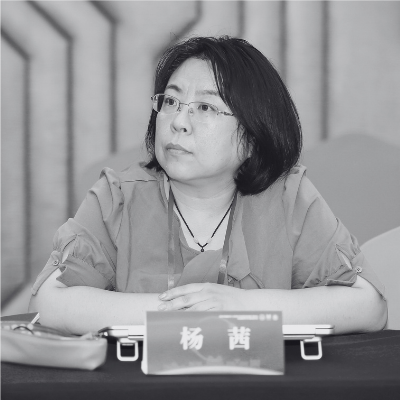
Yang Qian

Yang Qian is a Lecturer in the School of Economics at Hebei University and a Researcher at the university’s Center for Latin America Studies. She holds a Ph.D. in World Economy from the Latin America Institute, Chinese Academy of Social Sciences, and an M.A. in World Economy from Hebei University. Her research focuses on monetary and financial policies in Latin America, regional and country-specific studies, cross-border RMB settlement, and China-Latin America financial cooperation. She serves as a Council Member of the Chinese Association of Latin American Studies.
At Hebei University, she teaches undergraduate and graduate courses including International Finance, Financial Statistics, Macroeconomic Theory and Policy, and Advanced Development Economics. She has received the Teaching Innovation Excellence Award from Hebei University (2021). Dr. Yang has led several research projects, including a Ministry of Education program on cross-border RMB settlement and financial cooperation between China and Latin America, and a Hebei Provincial Social Sciences Fund project on international capacity cooperation with Latin American countries. Her publications include co-authored books such as International Finance and Global Capital City Clusters and Coordinated Development of Beijing-Tianjin-Hebei, as well as journal articles in both Chinese and Spanish.